August 31, 2026

LLC

Navigating the legal landscape of business name registration in Pennsylvania can be tricky. This guide provides a comprehensive overview, from understanding the importance of a proper search to exploring various online resources and legal considerations. Thorough preparation is key to avoiding potential pitfalls and ensuring a smooth registration process.

This resource will walk you through the essential steps for conducting a Pennsylvania business name search. We’ll cover everything from online search tools to the legal implications of different business structures and the vital role of legal counsel.

Introduction to Pennsylvania Business Name Searches

A business name search in Pennsylvania is a crucial step for entrepreneurs and businesses seeking to establish a legal presence. It’s a vital preliminary step in the registration process, ensuring the name selected isn’t already in use by another entity. This preventative measure safeguards against potential legal issues and ensures compliance with state regulations.Properly researching a business name before filing for registration is essential.

Choosing a name that’s already claimed by another business can lead to complications, delays, and legal conflicts. This proactive step minimizes these risks and protects the business from future disputes.

Purpose of a Business Name Search

A business name search in Pennsylvania verifies if a proposed business name is available for use. This search is a critical step to avoid conflicts with existing businesses. The process helps entrepreneurs select a unique and legally sound name for their venture.

Importance of Name Availability

Ensuring a business name’s availability is crucial for avoiding future legal challenges. Using a name already in use by another entity can lead to legal disputes, including injunctions or even the need to change the business name later. This proactive measure protects the business’s identity and brand from conflicts with existing businesses.

Legal Ramifications of Using an Existing Name

Using a business name already in use by another entity can have serious legal ramifications. This could include legal challenges from the existing business, potential injunctions, and the necessity of renaming the business. It’s vital to conduct a comprehensive name search before registering a business name to avoid these legal pitfalls.

Steps Involved in a Pennsylvania Business Name Search

Conducting a business name search in Pennsylvania is a straightforward process. The steps Artikeld below will help you determine the availability of your desired business name:

  1. Verify Availability Online: Utilize the Pennsylvania Department of State’s online business name search tool. This platform is designed for easy access and efficient searching of existing business names. It provides an initial check of name availability and will indicate whether the proposed name is already registered or in use.
  2. Check for Similar Names: Beyond the initial search, review similar names. This helps in preventing confusion with existing entities and enhances brand distinctiveness.
  3. Consult with Legal Counsel (Optional): While not mandatory, seeking advice from legal counsel can offer valuable insights into potential trademark conflicts and legal implications of a chosen business name. This step can help clarify any ambiguities in the name search process.
  4. Thorough Review of Results: Carefully examine the results of the name search. Pay close attention to any registered business names that are similar or potentially confusing. The results should be thoroughly evaluated for possible legal or commercial conflicts.

Online Business Name Search Resources

Finding a suitable business name in Pennsylvania is crucial for establishing a strong brand identity and avoiding legal complications. Online resources streamline this process, allowing entrepreneurs to quickly check for name availability and potential conflicts. This section details the various online tools available for conducting Pennsylvania business name searches.Online resources offer a convenient and cost-effective method for verifying business name availability.

These tools often provide immediate results, saving valuable time and resources compared to traditional methods. The ease of use and readily available information contribute significantly to the efficiency of the process.

Available Online Resources

Several websites offer tools for Pennsylvania business name searches. These resources typically allow users to enter potential business names and receive information about their availability. This allows entrepreneurs to avoid choosing a name already in use by another entity, preventing potential legal issues.

  • Pennsylvania Department of State website:
  • This official state government website provides comprehensive information regarding business registration and name availability. It is generally considered a reliable and authoritative source for conducting Pennsylvania business name searches.
  • Various third-party business name search services:
  • These services often integrate with the Pennsylvania Department of State’s database for accurate name availability checks. Some third-party services may provide additional features like name suggestions or trademark checks, which can further aid in the name selection process.

Comparison of Online Search Tools

A comparative analysis of various online name search tools helps entrepreneurs select the most appropriate option for their needs. Factors such as ease of use, accuracy, and cost are essential considerations.

Resource Ease of Use Accuracy Cost
Pennsylvania Department of State Fairly easy; straightforward interface. High; directly accessing official state data. Free
Example Service A Very easy; intuitive search functionality. High; integrates with official state database. Subscription-based; varying pricing plans.
Example Service B Easy; provides additional name suggestion tools. High; regularly updated data from state sources. Free basic search; premium features with a subscription.

Legal Considerations for Business Names

Choosing a business name in Pennsylvania involves more than just a catchy phrase; it has significant legal implications. A carefully selected name can protect your business’s identity and ensure compliance with state regulations. Understanding these legal requirements is crucial for establishing a successful and legitimate venture.Pennsylvania law dictates specific criteria for business names, ensuring clarity and avoiding confusion among businesses and consumers.

These regulations apply regardless of the business structure, from sole proprietorships to corporations. Knowing these rules prevents potential legal issues and strengthens your business’s foundation.

Rules for Naming a Sole Proprietorship

A sole proprietorship, the simplest business structure, often uses the owner’s name as the business name. This straightforward approach is common and usually sufficient. However, it’s advisable to check for existing similar names to avoid potential confusion.

Rules for Naming a Partnership

Partnerships, involving two or more owners, must clearly identify the partners in the business name or use a descriptive name that indicates the nature of the business. A partnership name should clearly distinguish it from other businesses operating in the same industry. For example, “Smith & Jones Landscaping” explicitly identifies the partners involved.

Rules for Naming an LLC

Limited Liability Companies (LLCs) in Pennsylvania must include “Limited Liability Company,” “LLC,” or “L.L.C.” in their business name. This designation is crucial for legal identification and consumer understanding. The name should also not be deceptively similar to another company’s name. For example, “ABC Consulting LLC” clearly identifies the business structure.

Rules for Naming a Corporation

Corporations, with their more complex structure, are subject to specific naming requirements. The name must include “Corporation,” “Corp.,” “Incorporated,” or “Inc.” These designations signify the corporate structure to the public and legal authorities. Similar to other business types, the name should be distinctive to avoid confusion. For example, “XYZ Enterprises Inc.” clearly signifies the corporate nature of the business.

Doing Business As (DBA)

A “Doing Business As” (DBA) name allows a business owner to operate under a name different from their legal name. For example, a sole proprietor might operate under a business name that is distinct from their personal name. This is frequently used when a business wants to project a distinct brand image. However, the DBA name must be registered with the state to be legally valid.

Comparison of Business Structures and Naming Conventions

Business Structure Naming Conventions
Sole Proprietorship Often uses owner’s name, but must be distinct.
Partnership Must clearly identify partners or use descriptive names.
LLC Must include “Limited Liability Company,” “LLC,” or “L.L.C.”
Corporation Must include “Corporation,” “Corp.,” “Incorporated,” or “Inc.”

Using a name that is misleading or confusing to the public or that is deceptively similar to another company’s name is a serious legal concern.

Legal Implications of a Misleading or Confusing Business Name

Using a misleading or confusing business name can lead to legal issues. This can include challenges from competitors or regulatory bodies. It’s critical to ensure your business name is clear, accurate, and not likely to cause confusion in the marketplace. For instance, a business name that mimics a well-known brand could face legal challenges.

Pennsylvania Business Entity Types

Pennsylvania offers a variety of business entity types, each with its own legal and tax implications. Understanding these differences is crucial for entrepreneurs choosing the best structure for their ventures. Careful consideration of liability protection, taxation, and administrative burdens is essential when making this decision.Choosing the right business structure in Pennsylvania impacts how the business is viewed legally and how it is taxed.

The chosen structure also affects personal liability for business debts and obligations. This decision should be made in consultation with legal and financial advisors, who can provide tailored guidance based on the specific circumstances and goals of the business.

Sole Proprietorship

A sole proprietorship is the simplest business structure, with the owner and the business being treated as one entity for legal and tax purposes. This straightforward setup is often favored for its ease of formation.

  • Pros: Minimal paperwork and administrative burden, direct control over business decisions, and potentially lower tax obligations compared to more complex structures.
  • Cons: Unlimited personal liability – the owner is personally responsible for all business debts and obligations. This means personal assets could be at risk.
  • Legal Requirements: Typically, only registering the business name with the state is required.
  • Naming Conventions: The business name typically uses the owner’s name or a trade name.

Partnership

A partnership involves two or more individuals who agree to share in the profits or losses of a business. Similar to sole proprietorships, partnerships are relatively easy to establish.

  • Pros: Shared financial burden and expertise, ease of setup, and potential tax benefits.
  • Cons: Partners are jointly and severally liable for business debts and obligations. This means each partner is liable for the entire debt if another partner defaults.
  • Legal Requirements: A partnership agreement outlining the responsibilities, profit/loss sharing, and dispute resolution mechanisms is often recommended but not always legally required.
  • Naming Conventions: The business name often includes the names of the partners or a trade name.

Limited Liability Company (LLC)

An LLC combines the benefits of a sole proprietorship/partnership with the limited liability protection of a corporation. This structure shields personal assets from business debts and obligations.

  • Pros: Limited liability protection, flexible management structure, and potential tax benefits.
  • Cons: More complex formation and administrative procedures compared to sole proprietorships or partnerships, and potentially higher initial costs.
  • Legal Requirements: Filing articles of organization with the Pennsylvania Department of State, including the business name and registered agent.
  • Naming Conventions: The business name must include “LLC” or the equivalent abbreviation at the end.

Corporation

A corporation is a more complex business structure considered a separate legal entity from its owners (shareholders). It provides the strongest form of limited liability protection.

  • Pros: Strongest form of limited liability protection, ability to raise capital through the sale of stock, and potentially lower individual tax burdens.
  • Cons: More complex formation and administrative procedures, higher initial costs, and double taxation (at the corporate level and again on distributions to shareholders).
  • Legal Requirements: Filing articles of incorporation with the Pennsylvania Department of State, specifying the corporate structure, and complying with ongoing corporate governance requirements.
  • Naming Conventions: The business name must include “Corporation,” “Corp.,” “Incorporated,” or “Inc.” at the end.

The Role of a Legal Advisor in Business Name Selection

Choosing a business name is a crucial step in establishing a successful enterprise. A well-selected name can significantly impact brand recognition and market perception. However, navigating the legal landscape surrounding business names requires careful consideration to avoid potential pitfalls. A legal advisor can provide invaluable assistance in this process.A business name, while seemingly simple, can be legally complex.

Selecting a name without proper legal guidance can lead to unforeseen issues, such as trademark conflicts, violations of existing copyrights, or issues with domain name availability. This can ultimately hinder a business’s growth and even lead to costly legal battles. A legal advisor possesses the expertise to navigate these complexities and ensure compliance with relevant regulations.

Potential Pitfalls of Unchecked Name Selection

A lack of legal review can lead to several significant problems. Potential conflicts with existing trademarks or service marks can result in costly litigation or prevent registration. A name that is too similar to an established competitor’s brand might confuse consumers and damage the new business’s reputation. Furthermore, a name that violates intellectual property rights could lead to cease-and-desist orders and other legal actions.

Expertise of a Legal Advisor

Legal advisors possess specialized knowledge in intellectual property law, corporate law, and trademark regulations. This expertise allows them to thoroughly investigate potential business names to ensure they are legally sound and free of conflicts. Their in-depth understanding of state and federal regulations allows them to identify potential issues that might not be apparent to the business owner. They also provide advice on how to best protect the chosen business name through registration and other legal means.

Preventing Future Legal Issues

A legal advisor can proactively prevent future legal problems by:

  • Conducting a comprehensive trademark search to identify any existing similar or identical trademarks, ensuring the chosen name is unique and legally available.
  • Reviewing the proposed name for compliance with state and federal regulations, ensuring it does not infringe on any existing intellectual property rights.
  • Advising on the best approach for registering the chosen name as a trademark or service mark, providing the appropriate documentation and procedures.
  • Helping to determine if the business name is available as a domain name, ensuring online accessibility.

This proactive approach is critical to avoiding costly legal issues down the line.

Questions to Ask a Legal Advisor

A well-informed discussion with a legal advisor is key to a successful business name selection. Consider asking the following questions:

  • What is the process for conducting a thorough trademark search in Pennsylvania?
  • How can I ensure my business name is not similar to an existing competitor’s brand or trademark?
  • What are the potential legal issues associated with my proposed business name?
  • What are the specific legal requirements for registering my business name in Pennsylvania?
  • What are the costs associated with trademark registration, and what are the timelines involved?
  • What are the potential pitfalls of using a common word or phrase as my business name?

Potential Pitfalls and Errors

Selecting a business name in Pennsylvania is a crucial step, but it’s easy to make mistakes that can lead to legal and operational issues down the road. Careful consideration and thorough research are essential to avoid these pitfalls. A poorly chosen name can hinder your business’s growth and even create legal complications.

Common Mistakes in Business Name Selection

Choosing a name that’s already in use by another business is a significant oversight. This can lead to legal disputes and potential trademark infringement. Similarly, failing to check for availability with relevant Pennsylvania regulatory bodies, such as the state Department of State, can create problems. Another common mistake is selecting a name that’s too generic or too similar to existing competitors, which might not clearly distinguish your business.

Consequences of Naming Errors

The consequences of naming errors can range from minor inconveniences to substantial legal battles. If your name is too similar to an existing business, you might face trademark infringement lawsuits. If your name is already in use, you may be unable to register your business or operate under the desired name. These problems can affect your ability to secure funding, build a brand, and operate your business smoothly.

Avoiding Naming Mistakes: Thorough Research

Thorough research is paramount to avoiding naming mistakes. Begin by checking if the name is already registered as a business name with the Pennsylvania Department of State. Then, investigate if the name is available as a domain name and social media handle. Conduct a comprehensive search for existing businesses with similar names to identify potential competitors. Finally, consider trademark searches to ensure your chosen name doesn’t infringe on existing trademarks.

Examples of Problematic Business Names

  • A business named “SuperMart” in a town already having a “The SuperMart” grocery store might face confusion and trademark issues. The similarity could lead to customer misdirection and legal challenges.
  • A business named “ABC Accounting” in a city with an established “ABC Accounting Solutions” firm would face problems due to the similarity. Customers might mistakenly believe they are associated, leading to confusion and potential legal action.
  • A business calling itself “Best Pizza” in a region already having a well-known “The Best Pizza” establishment could face challenges in establishing its unique identity. This could result in customer confusion and a struggle to build a brand.

These examples highlight the importance of ensuring the chosen name is distinctive and clearly identifies your business to avoid potential pitfalls. Checking for similar names and ensuring uniqueness will safeguard your business against legal issues and customer confusion.

Maintaining a Business Name
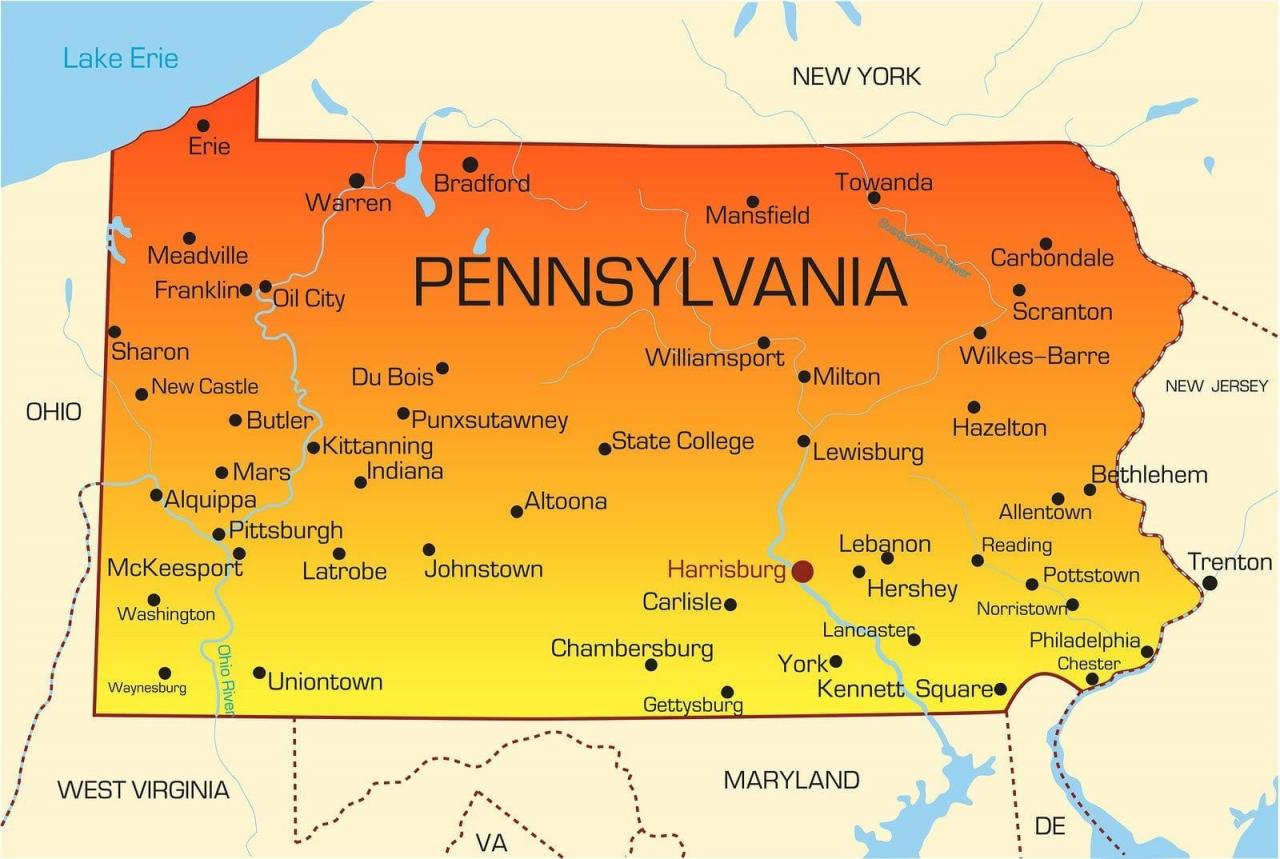
Pennsylvania Counties Map | Mappr

Maintaining a registered business name in Pennsylvania requires ongoing vigilance and adherence to specific procedures. Failure to properly maintain this registration can lead to legal complications and reputational damage. This section details the process for registering, maintaining, and the importance of updated records, as well as the repercussions of neglecting these duties.Maintaining a registered business name involves more than simply registering it initially.

It necessitates ongoing record-keeping and compliance with Pennsylvania’s regulations. Understanding these procedures and adhering to them is crucial for maintaining a legitimate and compliant business presence.

Registration Process Overview

Pennsylvania’s Department of State provides the necessary framework for registering a business name. This process involves submitting the required paperwork and fees. The specific documentation varies based on the type of business entity. A thorough understanding of these requirements is essential for a smooth and compliant registration process.

Steps for Maintaining the Registered Business Name

Regular updates to business records are vital for maintaining the registered business name. The Pennsylvania Department of State provides specific guidelines on the types of updates and the frequency of those updates. These updates can include changes to the business’s structure, address, or ownership.

  • Regular record review: Periodically review your business records to ensure accuracy and completeness.
  • Address changes: Immediately notify the state if there is a change in your business’s physical address. This is critical for proper mail delivery and communication.
  • Ownership changes: If there are changes in ownership, the appropriate paperwork must be filed with the Department of State.
  • Name changes: Any name changes must be formally registered with the state to avoid confusion and legal issues.
  • Compliance with state regulations: Ensure all filings and updates comply with Pennsylvania’s business regulations.

Importance of Updated Business Records

Accurate and up-to-date business records are critical for maintaining a legitimate business presence. These records provide a historical context for the business and demonstrate compliance with state regulations. This includes financial records, ownership details, and business structure information.

Consequences of Failing to Maintain a Registered Business Name

Failure to maintain a registered business name can lead to several negative consequences. These consequences can range from administrative penalties to legal ramifications.

  • Administrative penalties: The state may impose fines or other penalties for non-compliance.
  • Legal challenges: Failure to maintain proper registration can make the business vulnerable to legal challenges regarding its legitimacy.
  • Reputational damage: Lack of compliance can damage the business’s reputation and credibility with customers and stakeholders.
  • Inability to enforce contracts: Problems with registration can make it difficult to enforce contracts or conduct business.

Best Practices for Name Maintenance

Implementing best practices for maintaining a registered business name can significantly mitigate risks and ensure compliance.

  • Establish a record-keeping system: Create a comprehensive system to track all changes to the business name and related records.
  • Regular review of state regulations: Stay informed about any changes or updates to Pennsylvania’s business registration laws.
  • Seek professional guidance: Consult with a legal or business advisor for guidance on specific requirements and best practices.
  • Prompt filing of changes: File all required changes promptly to avoid delays and potential penalties.

Ending Remarks

In conclusion, a successful business name search in Pennsylvania hinges on meticulous research, a clear understanding of legal requirements, and potentially seeking expert advice. This guide equips you with the knowledge to navigate the process effectively and avoid common pitfalls, setting the stage for a legally sound and prosperous business venture.

FAQ Compilation

What are the penalties for using a business name already in use?

Using a name already registered by another entity can lead to legal issues and potential fines. It’s crucial to ensure the name’s availability before proceeding with registration.

How do I determine if a business name is available in Pennsylvania?

Conduct a thorough search using the resources detailed in the guide, verifying availability with the relevant Pennsylvania state authorities.

What are the differences in naming conventions for different business types (e.g., sole proprietorship, LLC)?

Different business structures have specific naming requirements. The guide provides details on these distinctions, highlighting potential pitfalls and how to avoid them.

What are some common mistakes in choosing a business name?

Common mistakes include choosing a name too similar to another business or one that’s misleading. The guide offers examples and insights to prevent these errors.

Navigating the world of business often requires understanding the various legal structures available. Choosing the right entity significantly impacts liability, taxation, and overall business operations. This guide delves into the key aspects of different business types, from sole proprietorships to corporations, equipping you with the knowledge to make informed decisions.

Different legal structures cater to diverse business needs. Understanding these differences is crucial for success. This overview will explore the intricacies of each structure, highlighting their advantages and disadvantages, and providing practical insights into their formation and operation.

Introduction to Legal Business Entities

Choosing the right legal structure for a business is crucial for its long-term success and compliance. This structure significantly impacts liability, taxation, and operational aspects. Understanding the different types of entities and their respective characteristics is essential for entrepreneurs and business owners.Different legal structures offer varying degrees of protection and flexibility. This overview will detail the common business structures, highlighting their key distinctions and providing practical examples.

This understanding empowers individuals to make informed decisions aligned with their business goals and legal obligations.

Overview of Business Structures

Various legal structures exist, each with its own set of advantages and disadvantages. A comprehensive understanding of these structures is vital for making informed decisions about a business’s legal framework. Sole proprietorships, partnerships, limited liability companies (LLCs), corporations, and S corporations are common choices.

Key Distinctions Between Entity Types

The key differences lie primarily in liability, taxation, and ownership. Sole proprietorships and partnerships often have simpler setup procedures but offer less liability protection. In contrast, LLCs and corporations provide greater liability protection for owners. Taxation also varies; some structures pass profits directly to owners, while others are subject to corporate taxation.

Common Business Structures in Different Jurisdictions

The most common business structures vary by jurisdiction, often reflecting legal and cultural norms. In the United States, sole proprietorships and partnerships are prevalent for smaller businesses, while corporations are common for larger enterprises. In other jurisdictions, the legal landscape and business practices may differ. For example, in some countries, limited liability companies may be the favored choice for startups.

Comparison of Key Features

Feature Sole Proprietorship Partnership LLC Corporation S Corporation
Liability Unlimited personal liability Unlimited personal liability (general partners); limited liability (limited partners) Limited liability Limited liability Limited liability
Taxation Business income is taxed as personal income Business income is taxed as personal income Pass-through taxation Corporate income tax Pass-through taxation
Ownership Single owner Multiple owners Multiple owners Multiple shareholders Multiple shareholders
Complexity Simple Can be simple or complex Moderate Complex Complex
Formation Easy Easy to moderate Moderate Complex Complex

The table above summarizes the key distinctions between the various business structures. This comparison provides a general overview; specific rules and regulations may vary by jurisdiction.

Sole Proprietorship

A sole proprietorship is a simple business structure where a single individual owns and operates the business. It’s the most straightforward form of business entity, often preferred by entrepreneurs for its ease of setup and management. This structure merges the business owner’s personal and business liabilities, which has important implications for personal financial protection.

Characteristics of a Sole Proprietorship

A sole proprietorship is characterized by a straightforward ownership structure, where the owner is the business. There’s no legal distinction between the owner and the business. This means the owner is personally liable for all business debts and obligations. This liability extends to business lawsuits and other legal actions. The business is not considered a separate legal entity from the owner.

Advantages of a Sole Proprietorship

  • Simplicity and ease of formation: Establishing a sole proprietorship typically involves minimal paperwork and legal fees compared to other business structures. This straightforward setup allows for quick startup and operation.
  • Complete control: The owner retains complete control over all business decisions and operations, without the need for consultations or approvals from partners or shareholders. This fosters autonomy and responsiveness to market changes.
  • Lower setup costs: Minimal administrative costs associated with formation and operation contribute to lower overall startup and ongoing expenses. This is especially appealing to new businesses with limited capital.

Disadvantages of a Sole Proprietorship

  • Unlimited personal liability: The owner is personally liable for all business debts and obligations, potentially exposing personal assets to creditors. This is a significant risk, particularly in high-liability industries or businesses with potential lawsuits.
  • Limited access to capital: Raising capital can be challenging for sole proprietorships due to the limited personal liability of the business owner, which restricts the availability of financing options compared to corporations.
  • Difficulty in transferring ownership: Transferring ownership can be complicated and often requires dissolution of the business and subsequent re-establishment under a different structure.

Formation of a Sole Proprietorship

Generally, forming a sole proprietorship doesn’t require formal registration with the government. The business owner typically operates under their own name or a trade name, which may require some registration with the local authorities to protect the business identity and prevent confusion. However, depending on the local jurisdiction and type of business, some regulatory requirements may apply.

Legal Implications for the Owner

The owner is fully liable for all business debts and obligations. This means creditors can pursue personal assets to satisfy business debts if the business’s assets are insufficient. This liability can extend to legal issues such as lawsuits or contractual disputes. Thorough record-keeping and compliance with relevant regulations are crucial for mitigating legal risks.

Tax Implications of a Sole Proprietorship

Category Description
Income Tax Business income is reported on the owner’s personal income tax return, using Schedule C (Profit or Loss from Business) in the U.S. system.
Self-Employment Tax The owner is responsible for paying self-employment taxes, covering Social Security and Medicare contributions. This is a significant tax consideration, as it is calculated based on the business’s net profit.
Payroll Taxes If the business employs others, payroll taxes must be withheld and remitted to the appropriate authorities.
State and Local Taxes Various state and local taxes may apply, depending on the location and type of business.

The tax implications of a sole proprietorship can be complex and vary by jurisdiction. Consulting with a tax professional is highly recommended to ensure accurate and compliant tax filings.

Partnership

A partnership is a business structure where two or more individuals agree to share in the profits or losses of a business. This arrangement typically involves a formal agreement outlining the responsibilities, profit distributions, and decision-making processes of the partners. Partnerships can be structured in various ways, each with distinct legal implications.

General Partnerships

General partnerships are the most straightforward type of partnership. All partners share in the management and operational aspects of the business. This means that each partner has a say in the day-to-day decisions and is personally liable for the business’s debts and obligations. This shared liability can be a significant factor in attracting investors and managing risks.

Limited Partnerships

Limited partnerships, in contrast, involve a mix of general and limited partners. General partners actively manage the business and have unlimited liability. Limited partners, however, invest capital but do not participate in the day-to-day operations and have limited liability, restricted to the amount of their investment. This structure provides investors with a degree of protection from personal liability while allowing others to actively manage the business.

Comparison of General and Limited Partnerships

Feature General Partnership Limited Partnership
Liability Unlimited liability for all partners Unlimited liability for general partners; limited liability for limited partners
Management All partners participate in management General partners manage; limited partners do not
Capital Investment Partners may invest varying amounts Limited partners typically invest a specific amount
Flexibility High flexibility in operational decisions Limited flexibility for limited partners

Responsibilities of Partners

The responsibilities of partners are Artikeld in the partnership agreement. These responsibilities may include contributing capital, managing specific aspects of the business, adhering to decision-making processes, and sharing profits or losses according to the agreement. Failing to fulfill these obligations can have legal consequences. A key responsibility is ensuring the partnership operates within the boundaries of the law.

Legal Documents for a Partnership

A partnership agreement is a crucial legal document that Artikels the terms and conditions of the partnership. It should include details on profit sharing, decision-making processes, dispute resolution, and the procedures for adding or removing partners. Other important legal documents might include articles of partnership, operating agreements, and any necessary licenses or permits for conducting business.

Dissolution of a Partnership

A partnership can be dissolved in various ways. These include the expiration of a specified term, the mutual agreement of the partners, the withdrawal of a partner, or the bankruptcy or death of a partner. The specific procedures for dissolving a partnership are often detailed in the partnership agreement. Legal counsel is often sought to ensure a smooth and compliant dissolution process.

Different Types of Partnerships (Summary)

  • General Partnership: All partners share in the management and are fully liable for the business’s debts.
  • Limited Partnership: Involves general partners with unlimited liability and limited partners with limited liability, who do not participate in management.

Limited Liability Company (LLC)

A Limited Liability Company (LLC) is a hybrid business structure that combines the benefits of a sole proprietorship or partnership with the limited liability features of a corporation. This structure provides significant advantages for entrepreneurs and small business owners, balancing personal asset protection with operational flexibility.LLCs offer a flexible approach to business ownership, allowing for varying degrees of management and control.

This flexibility, coupled with the ability to choose between pass-through taxation or corporate taxation, makes LLCs an attractive option for many business owners.

Benefits of Forming an LLC

LLCs provide several key advantages over other business structures. These include personal liability protection, operational flexibility, and tax advantages. Personal liability protection shields personal assets from business debts and lawsuits, offering a crucial safeguard against personal financial risk.

Legal Requirements for Forming an LLC

The specific legal requirements for forming an LLC vary by jurisdiction. Generally, these requirements involve filing articles of organization with the relevant state agency, adhering to state-specific regulations, and potentially obtaining necessary licenses or permits. Complying with these requirements ensures the legal standing of the LLC and its ability to operate within the legal framework of the jurisdiction.

Thorough research into local laws is critical.

Flexibility in Management and Taxation

LLCs offer substantial flexibility in management structures, allowing owners to determine the level of control and participation for each member. This adaptability is crucial for businesses with evolving needs. Furthermore, LLCs provide flexibility in taxation, enabling owners to choose between pass-through taxation (where profits and losses are reported on personal income taxes) or corporate taxation (providing potential tax benefits under certain circumstances).

Careful consideration of tax implications is vital in the decision-making process.

Comparison with Corporations

LLCs differ significantly from corporations in terms of liability, management, and taxation. Corporations, for instance, often involve more complex legal structures and administrative processes. LLCs generally have a simpler structure and reduced administrative burden. The choice between an LLC and a corporation depends on factors like the size and complexity of the business, the level of liability protection desired, and the owner’s tax strategy.

Process for Managing an LLC

Managing an LLC involves a series of operational tasks and procedures. These tasks often include maintaining accurate financial records, adhering to legal requirements, and ensuring compliance with state regulations. Effective record-keeping and communication are key elements in ensuring smooth operations and compliance.

Types of LLCs

Different types of LLCs cater to specific needs and circumstances. These variations often reflect the diverse range of business models and operational requirements. Understanding these variations is crucial for selecting the most appropriate structure for a particular business.

Type of LLC Description
Single-Member LLC A type of LLC with only one member.
Multi-Member LLC A type of LLC with more than one member.
Series LLC A type of LLC that allows for the creation of multiple, separate entities within a single LLC structure.

Corporation

A corporation is a more complex legal entity than the previous structures we’ve discussed. It’s a separate legal entity from its owners, offering a unique blend of advantages and disadvantages. This separation allows corporations to raise capital more easily and to potentially limit the liability of the owners.

Characteristics of a Corporation

Corporations possess several key characteristics distinguishing them from other business structures. They are separate legal entities, meaning they can enter contracts, own property, and sue or be sued independently of their owners. They also have perpetual existence, meaning they continue to operate even if ownership changes. This perpetual existence is a significant advantage for long-term ventures. Furthermore, corporations have the ability to raise capital through the sale of stock, a feature crucial for funding expansion and growth.

Corporate Personhood

The concept of corporate personhood, central to the legal framework of corporations, grants corporations many of the same rights and responsibilities as individuals. This means they can be held accountable for their actions, just as individuals are. This legal status has led to both advantages and challenges in the application of legal frameworks. The concept of corporate personhood is crucial in understanding the legal standing of corporations.

Types of Corporations

Corporations are broadly categorized into different types, each with its own set of rules and regulations. The most common distinctions are between C corporations and S corporations. These distinctions largely impact how profits are taxed and the liability of owners.

S Corporation

An S corporation, often chosen by small businesses, offers pass-through taxation. This means profits and losses are passed directly to the shareholders’ personal income, avoiding the double taxation of a C corporation. This can be advantageous in minimizing the tax burden for owners. S corporations are subject to stricter eligibility requirements, including limitations on the number and type of shareholders.

C Corporation

A C corporation is the more traditional type. It offers a broader range of funding options, including the ability to issue more types of stock and raise larger amounts of capital. However, C corporations face double taxation: profits are taxed at the corporate level, and then again when distributed to shareholders as dividends.

Advantages of Incorporating

Incorporating offers several advantages, particularly in terms of liability protection and raising capital. Limited liability shields personal assets from business debts and lawsuits. The ability to raise capital through the sale of stock is a powerful tool for growth and expansion. The ease of transferring ownership is another key benefit.

Disadvantages of Incorporating

The complexities of corporate governance and the need for meticulous record-keeping can be significant disadvantages. Double taxation, in the case of C corporations, can impact profitability. The administrative burden associated with compliance and reporting requirements can also be substantial.

Corporate Structure

The corporate structure typically involves a board of directors elected by shareholders. The board oversees the corporation’s management and sets strategic direction. The day-to-day operations are handled by officers appointed by the board. This separation of ownership and management is a cornerstone of the corporate structure.

S Corporation vs. C Corporation

Characteristic S Corporation C Corporation
Taxation Pass-through taxation (profits/losses flow to shareholders) Double taxation (corporate level, then shareholder level)
Ownership Structure Restrictions on shareholders (typically limited number and type) Fewer restrictions on ownership
Capital Raising Limited capital raising options More options for raising capital
Complexity Generally less complex Generally more complex
Liability Limited liability for shareholders Limited liability for shareholders

Business Legal Considerations

Navigating the legal landscape is crucial for any business, regardless of its size or structure. Understanding and adhering to legal requirements fosters a stable and predictable operational environment. Thorough legal planning minimizes risks and ensures compliance, ultimately contributing to the long-term success and sustainability of the business.Thorough legal planning is essential for businesses of all types and sizes.

Proper legal groundwork prevents potential disputes, facilitates smooth operations, and helps the business grow and adapt to future circumstances. These considerations encompass various facets, from the initial formation to ongoing operations.

Importance of Legal Counsel in Business Formation

Legal counsel plays a vital role in guiding businesses through the complexities of formation and structuring. Experienced legal professionals provide expert advice on choosing the most suitable legal structure for a given business. They help ensure compliance with all relevant laws and regulations. This expertise is especially valuable in complex situations, such as those involving multiple stakeholders or intricate financial arrangements.

Early legal guidance is invaluable in minimizing potential legal pitfalls down the road.

Key Legal Documents Required for Different Business Structures

The specific legal documents required vary depending on the chosen business structure. A well-defined set of documents safeguards the interests of all parties involved. These documents can include articles of incorporation, operating agreements, partnership agreements, and other relevant legal paperwork.

  • Sole Proprietorship: A simple business structure often requires fewer formal documents compared to other structures. However, crucial documents like operating agreements or business licenses are still vital for proper record-keeping and compliance.
  • Partnership: A partnership agreement is essential to Artikel the responsibilities, profit-sharing arrangements, and dispute resolution procedures among partners. This document is crucial for avoiding misunderstandings and conflicts.
  • Limited Liability Company (LLC): An operating agreement is fundamental for an LLC, defining the management structure, member responsibilities, and profit distribution. This agreement provides a clear framework for the company’s operations.
  • Corporation: Corporations require articles of incorporation, bylaws, and other regulatory documents. These documents establish the company’s structure, governance, and operations. Properly drafted articles of incorporation and bylaws are essential to maintain compliance and avoid potential legal issues.

Role of Contracts in Business Operations

Contracts are essential for defining the terms and conditions of business transactions. Clear, concise contracts protect the interests of all parties involved and help prevent disputes. These agreements can cover various aspects, such as sales, services, employment, and licensing.

Importance of Intellectual Property Protection for Businesses

Intellectual property protection safeguards valuable assets, including trademarks, patents, and copyrights. These protections are crucial for maintaining a competitive edge and preventing unauthorized use of intellectual property. Businesses should consult with legal counsel to determine the appropriate intellectual property protections needed.

Comparison of Different Business Licenses and Permits

Different business licenses and permits are required depending on the type of business and location. Businesses need to understand the specific requirements for their industry and jurisdiction. This ensures compliance and operates legally within the local and federal jurisdictions.

  • General Business Licenses: These licenses are typically required for any business operating within a specific jurisdiction.
  • Industry-Specific Licenses: These licenses are often required for businesses in regulated industries like healthcare, finance, or food service. These ensure compliance with specialized regulations.
  • Local Permits: Local permits may be required for specific activities like construction or operating a food truck.

Role of Compliance in Maintaining a Successful Business

Maintaining compliance with relevant laws and regulations is crucial for a successful business. This includes tax compliance, employment law, environmental regulations, and industry-specific rules. Ongoing compliance ensures a business operates legally and avoids potential penalties.

Table of Legal Documents by Business Structure

Business Structure Key Legal Documents
Sole Proprietorship Business License, Operating Agreement (recommended)
Partnership Partnership Agreement, Business License
LLC Operating Agreement, Articles of Organization, Business License
Corporation Articles of Incorporation, Bylaws, Business License

Choosing the Right Entity

Selecting the appropriate legal structure for a business is a critical decision impacting its long-term success. This choice profoundly affects various aspects, from taxation and liability to operational flexibility and growth potential. Careful consideration of these factors is essential for entrepreneurs and business owners.Choosing the right legal structure isn’t just about complying with regulations; it’s about aligning the business’s structure with its goals and aspirations.

This decision should be made in consultation with legal and financial professionals to ensure the best fit for the specific circumstances.

Factors Affecting Entity Selection

The selection of a business entity is influenced by several key factors. Understanding these influences allows entrepreneurs to make informed choices.

  • Business Goals and Ownership Structure: The nature of the business’s goals, its planned growth trajectory, and the desired level of control by owners are crucial. A startup seeking rapid expansion might favor a structure that facilitates fundraising and allows for flexible ownership shifts, while an established company with a stable ownership structure might prioritize liability protection and tax efficiency. For example, a sole proprietorship might be suitable for a small, single-owner business focused on providing services, while a corporation might be a better fit for a large company with multiple stakeholders.

  • Taxation: Tax implications are a significant determinant. Different structures have varying tax implications, affecting the amount of taxes paid by the business and its owners. A sole proprietorship, for instance, has pass-through taxation, meaning profits are taxed at the owner’s individual rate. Corporations, on the other hand, are subject to corporate income tax, potentially resulting in higher overall taxes.

    The choice depends on specific tax circumstances and the desire to minimize the tax burden. Consult with a tax professional for accurate and current information.

  • Liability: The level of personal liability protection offered by different entities is paramount. Sole proprietorships and general partnerships expose owners to unlimited personal liability for business debts and obligations. Limited liability companies (LLCs) and corporations, conversely, offer limited liability protection, shielding personal assets from business liabilities. The choice should be influenced by the risk associated with the business and the need to safeguard personal assets.

Examples of Successful Businesses Using Different Entities

Different entities have been successfully used by various businesses.

  • Sole Proprietorship: Many small service businesses, like freelance writers or consultants, thrive under a sole proprietorship structure due to its simplicity and ease of setup. The flexibility and direct control over business decisions are key attractions. This structure is often chosen for its simplicity and lower administrative overhead.
  • Limited Liability Company (LLC): Numerous technology startups and growing businesses have utilized LLCs for their limited liability protection. This structure provides a balance between the liability protection of a corporation and the simplicity of a partnership or sole proprietorship. It often becomes an attractive option for businesses seeking growth and expansion while maintaining control.
  • Corporation: Large companies, often public corporations, have employed the corporate structure to raise capital through stock sales. This structure offers the greatest degree of liability protection for its owners and is suitable for companies aiming for substantial growth and investor involvement. The structure is suitable for large-scale operations and investor appeal.

Long-Term Consequences of Entity Selection

The chosen entity has significant long-term consequences for a business.

  • Flexibility and Growth: The selected structure influences the business’s ability to adapt to changing circumstances and pursue growth opportunities. Certain structures, like corporations, can facilitate fundraising and expansion more readily than others.
  • Compliance and Administrative Burden: The level of compliance and administrative burden associated with each structure varies. Sole proprietorships, for example, typically have a lower administrative burden, while corporations have more complex regulatory requirements. This burden can affect the operational efficiency of the business.
  • Transferability and Ownership: The chosen structure affects how ownership interests can be transferred or changed over time. Different structures have varying degrees of ease in transferring ownership shares or interests, which is important for succession planning and potential business transitions.

Business Legal Compliance

Staying compliant with relevant regulations is crucial for any business. Non-compliance can lead to significant legal and financial repercussions, damaging the business’s reputation and long-term prospects. Understanding and adhering to legal frameworks is paramount for a healthy and sustainable business operation.Maintaining legal compliance is not a one-time event; it’s an ongoing process that requires vigilance and adaptation to changing regulations.

Businesses must proactively monitor legal developments and adapt their practices to meet evolving standards. This proactive approach fosters trust with stakeholders and safeguards against potential legal issues.

Importance of Regulatory Compliance

Compliance with relevant regulations is essential for a business’s success. It establishes a framework for responsible conduct, builds trust with customers, partners, and investors, and safeguards against costly legal disputes. Adherence to regulations fosters a positive public image and promotes ethical business practices.

Key Legal Regulations

Various legal regulations impact businesses, depending on the type of business and its location. Understanding these regulations is vital for avoiding penalties and maintaining a strong legal position.

  • Tax Regulations: Tax laws, including income tax, sales tax, and payroll tax regulations, vary significantly by jurisdiction. Businesses must accurately calculate and remit taxes to avoid penalties and interest charges. Failure to comply can lead to substantial financial burdens and legal action. A common example is failing to properly withhold and pay employees’ taxes.
  • Labor Laws: Employment laws govern employee relations, wages, working conditions, and safety standards. Compliance with labor laws is essential for avoiding lawsuits and maintaining a productive workforce. A crucial aspect is ensuring fair wages and proper benefits to employees, in line with applicable labor regulations.
  • Environmental Regulations: Environmental laws regulate pollution, waste disposal, and resource management. Compliance with these regulations is vital for minimizing environmental impact and avoiding fines or legal action. Examples include proper waste disposal methods and adherence to emission standards.
  • Consumer Protection Laws: These laws protect consumers from unfair or deceptive business practices. Businesses must ensure their products and services meet legal standards and comply with consumer protection laws to avoid lawsuits and maintain customer trust. A common example is ensuring product safety and accurate labeling.
  • Antitrust Laws: Antitrust regulations prohibit anti-competitive practices such as price-fixing, monopolies, and market allocation. Businesses must avoid activities that could harm competition and consumer welfare. Violating antitrust laws can lead to significant fines and penalties.

Implications of Non-Compliance

Non-compliance with legal regulations can have severe consequences. These consequences can range from fines and penalties to legal action, damage to reputation, and even business closure. The implications are often costly, impacting financial stability and long-term viability.

Maintaining Accurate Records and Reporting

Maintaining accurate records and providing accurate reporting are crucial aspects of legal compliance. These practices help demonstrate transparency and accountability, reducing the risk of legal challenges and promoting a trustworthy business image. A clear record-keeping system allows for efficient tracking of transactions, financial data, and operational activities. This helps businesses understand their financial health and adapt to changes in regulations.

Compliance Issues in Different Sectors

Compliance issues vary across different business sectors. Examples include:

  • Food and Beverage Industry: Maintaining food safety standards, complying with labeling regulations, and adhering to health and hygiene codes.
  • Healthcare Industry: Adhering to patient privacy regulations (HIPAA), maintaining medical records accurately, and ensuring compliance with medical device regulations.
  • Financial Services Industry: Adhering to banking regulations, maintaining accurate financial records, and complying with anti-money laundering (AML) regulations.
  • Technology Industry: Complying with data privacy regulations (GDPR), ensuring product safety, and adhering to intellectual property laws.

Key Regulations Table

Business Type Key Regulations
Sole Proprietorship Tax, labor, and consumer protection laws
Partnership Tax, labor, and consumer protection laws
LLC Tax, labor, environmental, and consumer protection laws
Corporation Tax, labor, environmental, consumer protection, and securities laws

Conclusive Thoughts

In conclusion, selecting the appropriate legal business entity is a pivotal step in establishing a successful venture. Careful consideration of factors like liability, taxation, and ownership structure is essential. This exploration has provided a comprehensive overview, empowering you to make informed decisions. Remember, consulting with legal professionals is always recommended for personalized guidance.

FAQ Resource

What are the common misconceptions about choosing a legal business entity?

A common misconception is that one structure is universally better. The ideal choice depends heavily on the specific business, its goals, and its owners’ circumstances. Another misconception is that the selection process is straightforward. It’s a nuanced decision that should be carefully considered.

How does taxation differ between different business entities?

Taxation varies significantly. Sole proprietorships and partnerships often pass profits directly through to owners, while corporations face corporate tax rates. LLCs can be structured to mirror either.

What are the implications of choosing a business entity for personal liability?

Liability protection is a key factor. Some entities, like LLCs and corporations, offer limited liability, shielding personal assets from business debts and lawsuits. Sole proprietorships and general partnerships do not offer this protection.

What are the crucial documents required for forming a partnership?

Key documents for a partnership include a partnership agreement outlining the terms of the partnership, including profit sharing, responsibilities, and dispute resolution mechanisms.

Understanding the various legal structures available for businesses is crucial for success. This guide delves into the key differences between sole proprietorships, partnerships, LLCs, and corporations, illuminating the implications for liability, taxation, and formation.

Choosing the right structure significantly impacts a business’s long-term viability. Factors such as the scale of operations, desired level of liability protection, and tax implications must be carefully considered.

Introduction to Legal Business Structures

Choosing the right legal structure for a business is crucial for its long-term success and compliance. This decision impacts liability, taxation, and administrative burdens. Understanding the fundamental differences between various structures is essential for making an informed choice. This section will Artikel the key factors to consider and present a comparative overview of common business structures.A business’s legal structure directly influences its operational efficiency and financial outcomes.

It dictates how the business is taxed, how its owners are protected from liability, and the administrative steps involved in its creation and maintenance. A thoughtful consideration of these elements is paramount in establishing a sound business foundation.

Key Differences Between Business Structures

Different business structures offer varying degrees of liability protection and tax implications. Understanding these distinctions is critical for selecting the most appropriate structure. Common structures include sole proprietorships, partnerships, limited liability companies (LLCs), and corporations.

Factors to Consider When Selecting a Business Structure

Several factors should be considered when choosing the right legal structure for a business. These include the desired level of liability protection, tax implications, ease of formation and ongoing compliance, and the potential for future growth and expansion. The level of personal liability is a primary concern, as is the ease of raising capital, particularly in the long term.

Comparison of Business Structures

Business Structure Type Liability Taxation Formation Requirements
Sole Proprietorship Unlimited liability; owner personally liable for business debts. Business income is reported on the owner’s personal tax return (pass-through taxation). Simple; minimal paperwork; often no formal registration required.
Partnership Unlimited liability for general partners; limited liability for limited partners (if applicable). Business income is reported on the partners’ personal tax returns (pass-through taxation). Relatively simple; requires a partnership agreement outlining the terms of the partnership.
Limited Liability Company (LLC) Limited liability; owners (members) are not personally liable for business debts. Pass-through taxation, similar to partnerships and sole proprietorships. More complex than sole proprietorships or partnerships; requires filing articles of organization with the state.
Corporation Limited liability; shareholders are not personally liable for business debts. Double taxation (corporate level and shareholder level). Most complex; requires incorporation documents and compliance with corporate regulations.

Note: Taxation and liability implications can vary based on specific state and local regulations. Consulting with a legal or financial professional is recommended for personalized advice.

Sole Proprietorship

A sole proprietorship is a simple business structure where a single individual owns and operates the business. It’s a straightforward way to begin a venture, often favoured for its ease of setup. This structure is prevalent in various industries, reflecting its adaptability to different operational models.The core characteristic of a sole proprietorship is the lack of legal distinction between the owner and the business.

This simplicity, while advantageous in some ways, also presents certain challenges, particularly concerning liability. Understanding these attributes is crucial for making informed decisions about business formation.

Characteristics of a Sole Proprietorship

Sole proprietorships are characterized by direct ownership and operation by a single individual. There’s no legal separation between the owner’s personal assets and the business’s liabilities. This direct connection means the owner is personally liable for all business debts and obligations. Profit and loss are reported directly on the owner’s personal tax return, simplifying accounting and reporting.

Comparison to Other Structures

Sole proprietorships differ significantly from other business structures like partnerships and corporations. Partnerships involve two or more individuals sharing in the business’s operation and profits, while corporations are separate legal entities with limited liability for shareholders. These distinctions affect liability, taxation, and management responsibilities. A crucial difference is the separation of personal and business liabilities, which is absent in a sole proprietorship.

Advantages of a Sole Proprietorship

The advantages of a sole proprietorship often stem from its simplicity. One key benefit is the ease of setup and minimal paperwork required compared to other structures. Operational control is fully vested in the owner, enabling quick decision-making and flexibility. A sole proprietor keeps all profits after business expenses. Furthermore, the business structure is often less costly to establish and maintain.

Disadvantages of a Sole Proprietorship

The lack of legal separation between the owner and the business is a significant disadvantage. The owner assumes full personal liability for business debts, which can jeopardize personal assets. Raising capital can be challenging as the owner’s personal creditworthiness is directly tied to the business’s financial health. The owner bears the entire burden of business management, potentially leading to burnout or insufficient attention to specific aspects.

Comparison Table

Characteristic Sole Proprietorship Partnership Corporation
Ease of Setup Low Medium High
Liability Protection None Limited (varies by agreement) High
Taxation Pass-through (owner’s personal return) Pass-through (partners’ personal returns) Corporate tax rate (separate from owner’s)

Legal Documentation

Establishing a sole proprietorship often requires minimal formal documentation. Generally, registering the business name with the relevant authorities is the most important step. This ensures the business name is unique and avoids conflicts with existing entities. Depending on local regulations, additional permits or licenses might be necessary. Maintaining detailed financial records is essential for tax reporting and overall business management.

Document Description
Business Name Registration Ensuring the business name is unique and legally registered.
Tax Identification Number (TIN) Required for tax reporting and record-keeping.
Business Licenses and Permits Depending on the industry and location, licenses and permits may be necessary.
Financial Records Detailed records of income, expenses, and transactions.

Partnership

A partnership is a business structure where two or more individuals agree to share in the profits or losses of a business. This arrangement often fosters collaboration and diverse skill sets, but it also necessitates clear agreements and shared responsibilities. The key to a successful partnership lies in a well-defined partnership agreement.

Types of Partnerships

Partnerships can be categorized into various types based on the extent of liability and the roles of the partners. Understanding these distinctions is crucial for selecting the appropriate structure for a specific business endeavor.

  • General Partnership (GP): In a general partnership, all partners share in the management and operational responsibilities of the business. Each partner has unlimited liability, meaning their personal assets are at risk to satisfy business debts. This is a common structure for small businesses where all partners actively participate in the daily operations.
  • Limited Partnership (LP): A limited partnership has both general and limited partners. General partners manage the business and have unlimited liability. Limited partners contribute capital but have limited liability, meaning their personal assets are protected up to the extent of their investment. This structure is often suitable for businesses seeking capital investment without relinquishing management control.
  • Limited Liability Partnership (LLP): An LLP combines the benefits of a partnership with the limited liability features of a corporation. Partners in an LLP are not liable for the negligence or malpractice of other partners. This structure is common in professions like law and accounting, providing protection against the potential liabilities of other partners.

Legal Agreements and Responsibilities

A well-drafted partnership agreement is essential for a smooth and successful partnership. This agreement Artikels the rights, duties, and responsibilities of each partner, including profit sharing, decision-making processes, dispute resolution mechanisms, and procedures for partner exits or additions. It acts as a roadmap for the partnership’s future.

Partnership Agreement: Step-by-Step Guide

  1. Define the Business Purpose: Clearly state the objectives and goals of the partnership, including the type of business, its scope, and its target market. This lays the groundwork for future decisions.
  2. Partner Contributions: Artikel the initial contributions of each partner, including capital, expertise, and time commitment.
  3. Profit and Loss Sharing: Specify how profits and losses will be divided among partners. This can be based on capital contributions, time commitment, or a combination of factors.
  4. Management and Decision-Making: Detail the decision-making processes, including voting rights and responsibilities of each partner. A clear structure avoids disputes.
  5. Dispute Resolution: Include mechanisms for resolving disputes, such as mediation or arbitration, to ensure a smooth process if conflicts arise.
  6. Partner Withdrawal and Dissolution: Define the procedures for partner withdrawal or the dissolution of the partnership, including the distribution of assets and liabilities.
  7. Duration of the Partnership: Specify the timeframe for the partnership’s existence. This could be indefinite or for a set period.
  8. Governing Law: Identify the state or jurisdiction that governs the partnership agreement.

Responsibilities of Partners

Partners have a fiduciary duty to act in the best interests of the partnership. This includes being honest, loyal, and diligent in their dealings with the business and other partners. Transparency and open communication are crucial to maintaining trust and ensuring a healthy partnership dynamic. This encompasses abiding by the terms of the partnership agreement.

Comparison of General and Limited Partnerships

Characteristic General Partnership Limited Partnership
Liability Unlimited liability for all partners Limited liability for limited partners; unlimited liability for general partners
Management All partners participate in management General partners manage the business; limited partners do not participate
Capital Contribution Partners may contribute capital, expertise, or time Limited partners contribute capital; general partners contribute management and expertise
Flexibility Relatively flexible structure More structured and regulated
Complexity Generally simpler to set up More complex to establish

Limited Liability Company (LLC)

A Limited Liability Company (LLC) is a hybrid business structure that combines the benefits of sole proprietorships, partnerships, and corporations. It offers a flexible framework, allowing business owners to tailor the structure to their specific needs and goals. This flexibility is a key attraction for many entrepreneurs.The LLC structure provides a significant advantage over other business models by limiting personal liability for business debts and obligations.

This crucial element distinguishes LLCs from sole proprietorships and partnerships, where owners can be held personally responsible for business debts. This liability protection is a primary reason for the popularity of LLCs.

Characteristics of an LLC

LLCs offer a degree of flexibility not found in other business structures. Owners, called members, can structure the management and operational aspects of the company in various ways, defining their roles and responsibilities within the framework. This adaptability allows for a tailored approach to the business’s needs and the owners’ preferences.

Benefits of an LLC Compared to Other Structures

LLCs generally provide the benefit of limited liability, shielding personal assets from business debts. This is a significant advantage over sole proprietorships and general partnerships, where personal assets are at risk. Moreover, LLCs often have pass-through taxation, meaning profits and losses are passed directly to the owners’ personal income taxes, avoiding the double taxation often associated with corporations.

This tax efficiency is an attractive feature for many business owners.

Drawbacks of an LLC Compared to Other Structures

While LLCs offer many advantages, there are also potential drawbacks. The formation process can be more complex and costly compared to sole proprietorships or partnerships. Furthermore, some states may impose specific regulatory requirements and compliance burdens on LLCs. The specific regulations and requirements vary from state to state.

Liability Protection Offered by an LLC

The core benefit of an LLC is its liability protection. This means that the personal assets of the owners are generally shielded from business debts and lawsuits. This protection is a critical consideration, particularly for businesses that may face significant legal risk.

Steps to Form an LLC

The process of forming an LLC involves several key steps. First, choose a name that complies with state regulations and isn’t already in use. Next, prepare and file the Articles of Organization with the relevant state agency. This document Artikels key information about the LLC, including its name, address, and members. Additionally, obtain the necessary licenses and permits required by local and state jurisdictions.

Complying with all applicable regulations is essential.

Legal Requirements and Procedures for Forming an LLC

Specific legal requirements for forming an LLC vary by state. Thorough research and consultation with legal counsel are recommended to ensure compliance with all applicable state laws. Procedures may include registering the LLC with the state, obtaining necessary licenses, and adhering to reporting requirements. Professional guidance is strongly recommended.

Tax Implications of Forming an LLC

LLCs are typically taxed as pass-through entities. This means that the profits and losses of the LLC are passed directly to the owners’ personal income tax returns. This avoids the double taxation that corporations face. However, the specific tax implications depend on the structure of the LLC and the specific tax laws in effect.

LLC vs. Corporation vs. Partnership

Characteristic LLC Corporation Partnership
Liability Protection Limited Limited Generally, unlimited (except LLP)
Taxation Pass-through Double Pass-through
Complexity Moderate High Low
Formation Costs Moderate High Low

Corporation

A corporation is a distinct legal entity separate from its owners, offering a significant degree of liability protection. This separation is crucial for investors and businesses alike, shielding personal assets from business debts and legal liabilities. Corporations can raise capital more easily compared to other business structures, and have a more complex structure and governance model.Corporations operate under a set of specific legal rules and regulations, designed to ensure transparency and accountability.

This framework allows for a more organized and structured approach to managing the business, while also potentially increasing the complexity of administrative tasks.

Characteristics of a Corporation

Corporations are characterized by their distinct legal personality, separate from their owners. This means that the corporation can enter into contracts, own property, and incur debts independently of its shareholders. The corporate structure also typically involves a board of directors who oversee the corporation’s management and operations, and shareholders who elect the board and have ownership interests.

Corporate Structure and Governance

The structure of a corporation often includes a board of directors, responsible for setting strategic direction and overseeing management. The board appoints officers (e.g., CEO, CFO) to manage the day-to-day operations. Shareholders, the owners of the corporation, elect the board and have certain rights regarding corporate matters, such as voting on major decisions. This structure, though complex, provides a framework for accountability and decision-making.

Advantages of Forming a Corporation

  • Limited Liability: A corporation shields personal assets from business liabilities, meaning shareholders are not personally responsible for debts or lawsuits against the corporation.
  • Easier Access to Capital: Corporations can raise capital through the sale of stock, making it easier to fund expansion and operations compared to other structures.
  • Perpetual Existence: A corporation continues to exist even if shareholders change or the original founders leave. This continuity provides stability and long-term viability.
  • Transferability of Ownership: Ownership in a corporation is easily transferred through the sale or transfer of stock.

Disadvantages of Forming a Corporation

  • Increased Complexity: Corporations have more complex legal and administrative requirements than other business structures, involving detailed record-keeping, compliance, and reporting.
  • Higher Costs: Forming and maintaining a corporation involves significant legal and administrative fees, which can be substantial, especially in the initial stages.
  • Double Taxation: Profits are taxed at the corporate level and again when distributed to shareholders as dividends. This double taxation can be a significant disadvantage compared to other structures.
  • Increased Regulatory Scrutiny: Corporations face more scrutiny and regulations from government agencies, compared to simpler business structures.

Types of Corporations

Type Description Tax Treatment
C Corporation The most common type, offering limited liability but facing double taxation. Income taxed at the corporate level and again when distributed as dividends.
S Corporation Offers pass-through taxation, meaning profits and losses are passed directly to the shareholders. Income is taxed only at the shareholder level, avoiding double taxation.
Nonprofit Corporation Organized for charitable or educational purposes, exempt from federal income tax. Profits are reinvested in the organization and not distributed as dividends.

Tax Treatment Comparison

Tax treatment significantly differs across business structures. Corporations face double taxation, while partnerships and sole proprietorships typically experience pass-through taxation. LLCs can be structured for either pass-through or corporate tax treatment.

This variance in tax implications is a critical factor to consider when selecting a business structure.

Legal Requirements for Forming a Corporation

The legal requirements for forming a corporation vary by jurisdiction. Generally, these include:

  • Filing Articles of Incorporation with the relevant state agency.
  • Creating bylaws that Artikel the corporation’s internal rules and regulations.
  • Complying with state and federal regulations related to corporate governance.

These steps ensure compliance and establish the corporation’s legal standing.

Liability Protection Comparison

Business Structure Liability Protection
Corporation Limited liability, protecting personal assets from business debts and lawsuits.
Sole Proprietorship No liability protection; personal assets are at risk.

This critical difference in liability protection highlights the significant advantage of a corporate structure.

Business Legal Considerations

Understanding the legal ramifications of choosing a specific business structure is crucial for long-term success. A thorough grasp of applicable regulations, potential legal disputes, and the importance of legal counsel is essential for navigating the complexities of business law. This section will delve into the legal implications associated with different business structures.Choosing the right legal structure significantly impacts liability, taxation, and operational flexibility.

Ignoring legal considerations can lead to costly mistakes and even legal challenges. Proactive legal planning is key to safeguarding your business interests.

Legal Implications of Different Structures

Understanding the legal implications of each structure is paramount to mitigating risks. Each business structure presents unique legal considerations, affecting everything from personal liability to taxation.

  • Sole Proprietorship: In a sole proprietorship, the owner and the business are legally indistinguishable. This simplicity comes with significant personal liability. All business debts and obligations are the responsibility of the owner. Regulations often focus on licensing and permits required for specific industries.
  • Partnership: Partnerships, whether general or limited, also involve shared liability. Partners are typically jointly and severally liable for business debts. Specific partnership agreements Artikel the responsibilities and liabilities of each partner. State laws governing partnerships dictate the formation, operation, and dissolution of the partnership.
  • Limited Liability Company (LLC): LLCs offer a balance between the simplicity of partnerships and the limited liability of corporations. Members of an LLC generally are not personally liable for the company’s debts. State laws govern LLC formation, operation, and dissolution, with varying requirements for record-keeping and compliance.
  • Corporation: Corporations are separate legal entities from their owners (shareholders). This separation provides limited liability protection for shareholders. Corporations face more complex regulatory requirements, including compliance with corporate governance laws and securities regulations, depending on the corporation’s type (S-corp or C-corp). This often involves more stringent reporting and administrative burdens.

Relevant Regulations and Laws

Various regulations and laws apply to different business structures, and these vary by jurisdiction. Understanding these regulations is crucial for compliance and avoiding legal issues.

  • State Laws: State laws often govern the formation, operation, and dissolution of businesses. These laws vary widely, influencing the specific requirements for each structure. For instance, some states might have more stringent regulations regarding LLCs than others.
  • Federal Regulations: Federal regulations, such as those related to taxation (e.g., IRS guidelines for corporations), also impact businesses. Knowing federal tax implications and compliance requirements is crucial for businesses structured as corporations.
  • Industry-Specific Regulations: Certain industries have unique regulations. For example, healthcare or finance industries face specific compliance requirements.

Importance of Consulting with Legal Professionals

Seeking legal advice is highly recommended when forming a business. Legal professionals can help navigate the complexities of the law and tailor the business structure to meet specific needs.

  • Avoiding Legal Pitfalls: Legal counsel can help identify potential legal risks associated with each structure and develop strategies to mitigate them.
  • Compliance with Regulations: Legal professionals can ensure compliance with all applicable laws and regulations.
  • Minimizing Tax Liabilities: Understanding tax implications is crucial, and a legal professional can help to structure the business to minimize tax liabilities.

Flowchart for Seeking Legal Advice

A structured approach to seeking legal advice is crucial for businesses. The process should be clear and well-defined.[A flowchart illustrating the process of seeking legal advice for business formation could be presented here. This flowchart would visually guide a business owner through the steps of identifying their legal needs, contacting legal professionals, selecting counsel, and obtaining legal advice.]

Legal Issues in Different Business Structures

Legal issues can arise in any business structure, though the nature of these issues might differ.

  • Sole Proprietorship: A sole proprietor might face issues related to personal liability for business debts or disputes with customers.
  • Partnership: Disagreements among partners are a common issue. These disputes could arise over profit sharing, decision-making, or management of the business.
  • LLC: LLCs might face challenges related to operating agreements, member disputes, or compliance with state laws.
  • Corporation: Corporations face legal issues related to corporate governance, shareholder disputes, or compliance with securities laws.

Examples of Common Legal Disputes

Common legal disputes vary based on the business structure. Some examples include contract disputes, intellectual property issues, and employment law violations.

Table: Legal Risks and Considerations

| Business Structure | Potential Legal Risks | Key Considerations ||—|—|—|| Sole Proprietorship | Unlimited personal liability | Simple to form, minimal paperwork || Partnership | Joint and several liability | Partnership agreement crucial || LLC | Limited liability for members | Compliance with state laws || Corporation | Limited liability for shareholders | Complex structure, strict regulations |

Choosing the Right Structure

Selecting the appropriate legal structure for a business is a critical decision impacting its long-term viability and success. This choice profoundly influences liability, taxation, and administrative complexities. Careful consideration of various factors is essential to ensure alignment with the business’s goals and future aspirations.Understanding the nuances of each structure empowers entrepreneurs to make informed decisions, paving the way for a thriving and sustainable venture.

The decision matrix, detailed checklist, and expert resources presented here offer practical tools for navigating this crucial step in the business journey.

Factors Influencing Structure Selection

A multitude of factors play a significant role in determining the optimal business structure. These factors encompass financial considerations, operational requirements, and future growth projections. Key aspects include the desired level of personal liability protection, the anticipated scale of operations, and the projected financial performance.

Decision Matrix for Choosing the Best Structure

A decision matrix serves as a structured approach to evaluate the suitability of different structures. It systematically assesses the advantages and disadvantages of each structure based on specific business criteria.

Business Criteria Sole Proprietorship Partnership LLC Corporation
Personal Liability High High (General Partnership), Moderate (Limited Partnership) Low Low
Taxation Pass-through Pass-through Pass-through Separate entity
Complexity Low Moderate Moderate High
Capital Raising Limited Limited Moderate High
Flexibility High High Moderate Low

This matrix aids in a comparative analysis, enabling a more informed decision.

Resources for Expert Advice

Seeking expert advice is crucial for navigating the intricacies of business structures. Consultations with legal and financial professionals provide valuable insights tailored to the specific business context. Online resources, industry publications, and small business development centers offer additional avenues for guidance.

Checklist for Evaluating Business Needs

A comprehensive checklist helps evaluate the alignment of business needs with different structures.

  • Projected growth: Consider future expansion plans and how different structures accommodate scalability.
  • Financial resources: Assess the availability of capital and how different structures affect funding opportunities.
  • Legal compliance: Evaluate the regulatory requirements for each structure and the associated administrative burdens.
  • Liability concerns: Analyze the level of personal liability exposure under each structure.
  • Tax implications: Compare the tax consequences of each structure, considering long-term financial planning.

Examples of Successful Business Structures

Numerous businesses have successfully utilized various structures to achieve their goals. For instance, a sole proprietorship might be ideal for a small, freelance business, while a corporation may be more suitable for a large-scale enterprise requiring significant capital. A partnership can be advantageous for businesses with shared expertise and responsibilities.

Suitability Based on Business Size and Goals

The suitability of different structures is contingent on the size and goals of the business. Small businesses often opt for sole proprietorships or partnerships due to their simplicity, while larger businesses frequently choose corporations or LLCs for their liability protection and scalability. Businesses with specific financial goals, such as raising substantial capital, may find corporations to be a better fit.

Final Summary

In conclusion, navigating the landscape of business structures requires a nuanced understanding of the legal and financial implications. This guide provides a comprehensive overview, allowing entrepreneurs to make informed decisions about their business’s legal framework.

Ultimately, selecting the appropriate structure is a crucial step in ensuring long-term success and avoiding potential pitfalls.

Expert Answers

What are the common misconceptions about forming a limited liability company (LLC)?

Many believe LLCs automatically shield business owners from all personal liability. While they offer significant protection, certain actions or debts can still expose personal assets. Consulting with a legal professional is essential to understand the specific nuances of liability protection for your situation.

How does taxation differ between a sole proprietorship and a partnership?

Sole proprietorships pass through business income to the owner’s personal income tax return, while partnerships use a similar structure. However, partnerships might have specific requirements regarding tax reporting and compliance, depending on the type of partnership.

What are the key steps involved in creating a partnership agreement?

A thorough partnership agreement should Artikel the responsibilities, profit-sharing, dispute resolution mechanisms, and the exit strategy for partners. Seeking legal counsel is highly recommended for ensuring a comprehensive and legally sound agreement.

What are the common legal disputes in a corporation?

Disagreements among shareholders, conflicts of interest, and issues related to corporate governance can lead to legal disputes. Properly drafted corporate bylaws and a well-defined corporate structure can mitigate these risks.