Bitcoin price all time brings to light the fascinating journey of one of the most revolutionary digital currencies ever created. Over the years, Bitcoin has experienced remarkable price fluctuations, driven by a unique blend of technological advances, regulatory changes, and market psychology. This discussion seeks to explore the historical trends, comparisons, and the various factors influencing Bitcoin’s price trajectory, providing both a retrospective and a forward-looking view of this cryptocurrency.
From its humble beginnings to its status as a financial phenomenon, understanding the forces that have shaped Bitcoin’s price over time is crucial for investors and enthusiasts alike. We will delve into significant milestones, compare price movements across eras, and examine the prevailing market dynamics that contribute to its volatility and ongoing evolution.
Historical Trends of Bitcoin Price
Bitcoin, introduced in 2009 by an anonymous entity known as Satoshi Nakamoto, has experienced a tumultuous price journey marked by extreme volatility and significant milestones. Over the years, the price of Bitcoin has witnessed substantial spikes and drops, influenced by various technological, regulatory, and socio-economic factors. Understanding these historical trends is crucial for appreciating Bitcoin’s evolution as both a digital asset and a financial phenomenon.Several key milestones have defined Bitcoin’s price trajectory.
Significant events not just impacted the market but also shaped public perception and adoption of cryptocurrencies.
Major Price Milestones
The price of Bitcoin has undergone notable fluctuations since its inception. Each major movement can be attributed to specific events or trends. Here are some pivotal moments that stand out:
- 2013 Price Surge: Bitcoin reached $1,000 for the first time, fueled by increased media attention, growing public interest, and the launch of regulated exchanges like Mt. Gox.
- 2014 Mt. Gox Collapse: The collapse of the leading Bitcoin exchange at the time, Mt. Gox, which filed for bankruptcy following a massive hack, caused Bitcoin’s price to plummet to around $400.
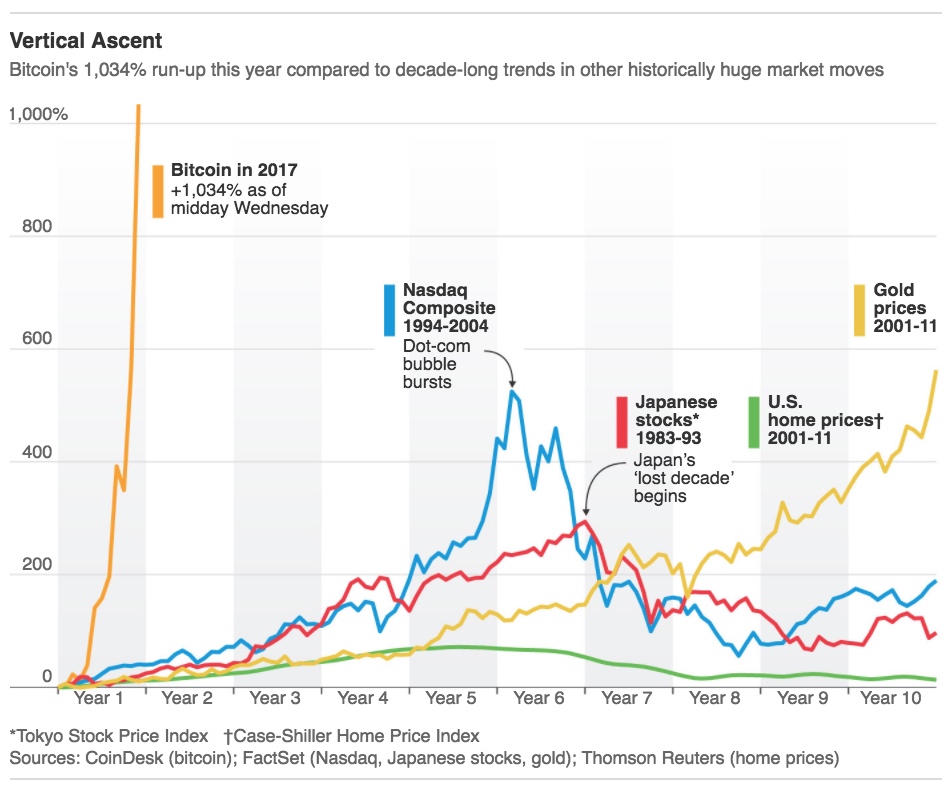
- 2017 Bull Run: Bitcoin’s price soared to nearly $20,000 in December 2017, driven by retail investor enthusiasm, increased institutional interest, and the launch of Bitcoin futures trading on major exchanges.
- 2020 Pandemic Influence: The onset of the COVID-19 pandemic initially led to a sharp decline in Bitcoin’s price, dropping below $5,000 in March 2020. However, it quickly recovered, reaching new all-time highs in late 2020 as investors sought safe-haven assets.
- 2021 Market Expansion: Bitcoin hit an all-time high of approximately $64,000 in April 2021, propelled by institutional adoption, corporate purchases by companies like Tesla, and growing acceptance from financial institutions.
Factors Contributing to Price Movements
Various factors have significantly influenced Bitcoin’s price fluctuations throughout its history. Understanding these elements offers insight into Bitcoin’s market behavior.
- Market Sentiment: Positive or negative news can have immediate effects on Bitcoin’s price. For instance, regulatory announcements often lead to price volatility.
- Technological Developments: Upgrades to the Bitcoin network, such as the implementation of the Lightning Network, can enhance scalability and security, reflecting positively on price.
- Global Economic Conditions: Economic instability, inflation concerns, and currency devaluation have driven investors towards Bitcoin as a store of value.
- Media Coverage: Increased media attention, whether positive or negative, has historically influenced public perception and investor behavior.
Key Events Influencing Price Trajectory
Several key events have left an indelible mark on Bitcoin’s price history, shaping its market dynamics.
- Regulatory Announcements: News regarding regulations in major markets, such as China banning cryptocurrency transactions or the SEC’s stance on Bitcoin ETFs, has led to immediate and often drastic price reactions.
- Adoption by Major Corporations: High-profile endorsements by companies like PayPal and Square, offering cryptocurrency services, have bolstered confidence and increased demand.
- Hacks and Scandals: Security breaches at exchanges and wallet services have instilled fear in investors, leading to sharp price declines.
- Blockchain Forks: Events like the Bitcoin Cash fork in 2017 created confusion and volatility, impacting Bitcoin’s market stability.
Price Comparison Over Time
Bitcoin’s price has experienced significant fluctuations since its inception in 2009. Understanding its price dynamics over time is crucial for investors, traders, and analysts alike. By examining historical price points, we can identify patterns that reflect broader market trends and investor sentiment.The following table illustrates Bitcoin prices at various historical milestones, emphasizing key periods categorized as bull and bear markets.
This data provides insight into the volatile nature of cryptocurrency and aids in understanding the percentage changes in price over specified intervals.
Bitcoin Price Table
Here is a detailed comparison of Bitcoin prices at different points in time, including percentage changes across bull and bear markets:
| Year | Price (USD) | Market Phase | Percentage Change |
|---|---|---|---|
| 2010 | $0.08 | Early Growth | – |
| 2013 | $1,150 | Bull Market | 1,437.5% |
| 2014 | $530 | Bear Market | -53.91% |
| 2017 | $19,783 | Bull Market | 3,630.75% |
| 2018 | $3,194 | Bear Market | -83.90% |
| 2020 | $29,000 | Bull Market | 809.41% |
| 2021 | $64,400 | Bull Market | 121.55% |
| 2022 | $16,000 | Bear Market | -75.13% |
| 2023 | $26,000 | Recovery Phase | 62.50% |
“Understanding Bitcoin’s price history allows for better-informed investment decisions.”
The percentage changes reflect the extreme volatility that characterizes the cryptocurrency market. Notably, Bitcoin’s journey from negligible value in its early days to a peak near $65,000 highlights both the potential for substantial gains and the risks of sharp declines. Each market phase—whether bull or bear—provides valuable lessons for current and future investors in tracking trends and making informed decisions.
Influencing Factors on Bitcoin Price
The price of Bitcoin is not determined solely by supply and demand dynamics within the cryptocurrency market. Various external factors also play a significant role in shaping its valuation. Understanding these influencing factors can provide insights into price movements and help investors make informed decisions. Global economic events, regulatory news, and technological advancements are three major elements that can significantly impact Bitcoin prices.
Impact of Global Economic Events on Bitcoin Prices
Global economic events can create ripples in financial markets, including the cryptocurrency sector. Economic indicators such as inflation rates, interest rates, and geopolitical crises often lead to price fluctuations in Bitcoin. For instance, during times of economic uncertainty, investors might flock to alternative assets like Bitcoin as a hedge against traditional market volatility.
- Inflation Concerns: When inflation rises, traditional currencies may lose value, prompting investors to seek refuge in Bitcoin, which is often viewed as a store of value.
- Geopolitical Tensions: Events such as wars or trade disputes can lead to market instability, boosting Bitcoin’s appeal as a decentralized asset that operates independently of national borders.
- Macroeconomic Policies: Central banks’ decisions, such as quantitative easing or changes in interest rates, can impact investor sentiment and, consequently, Bitcoin prices.
Regulatory News Affecting Bitcoin Valuation
Regulatory developments can have profound effects on Bitcoin’s market valuation. Decisions made by governments and financial authorities can either bolster or hinder the growth of cryptocurrencies.
- Legislation Changes: Positive regulatory news, such as the approval of Bitcoin ETFs, can lead to price surges as institutional investors seek to enter the market.
- Crackdowns: Conversely, announcements of stricter regulations, such as bans on cryptocurrency trading in certain regions, can lead to panic selling and price drops.
- Taxation Policies: Clarity on taxation for Bitcoin transactions can influence investor behavior, as favorable tax conditions may encourage more trading and investment.
Role of Technological Advancements in Bitcoin Pricing
Technological innovations within the cryptocurrency landscape play a critical role in influencing Bitcoin’s price. Improvements in blockchain technology, security measures, and scalability can enhance user experience and trust in Bitcoin, thereby affecting its value.
- Scalability Solutions: Developments like the Lightning Network, which enhances transaction speeds and reduces costs, can lead to increased adoption and higher prices.
- Security Enhancements: Upgrades to Bitcoin’s underlying technology that improve transaction security can boost investor confidence, contributing to price increases.
- Interoperability: Efforts to enable Bitcoin to interact with other blockchain networks can expand its usability and adoption, impacting its market value positively.
“Technological progress in the cryptocurrency space often correlates with a rise in Bitcoin’s price, as it enhances its functionality and acceptance across various sectors.”
Predictions for Future Bitcoin Prices
The future of Bitcoin prices continues to be a hot topic among investors, analysts, and enthusiasts. Given Bitcoin’s historical volatility and evolving market dynamics, various methodologies are employed to forecast its price trajectory. Understanding these methods and scenarios can provide valuable insights for potential investors and stakeholders in the cryptocurrency landscape.Different methodologies for predicting Bitcoin prices can be categorized into fundamental analysis, technical analysis, and sentiment analysis.
Fundamental analysis examines external factors affecting Bitcoin, such as regulatory changes, adoption rates, and technological advancements. Technical analysis, on the other hand, focuses on historical price charts and patterns to identify potential price movements. Sentiment analysis gauges market sentiment through social media trends, news coverage, and investor behavior, which can significantly influence price directions.
Forecast Models and Their Outcomes
A variety of forecast models exist that attempt to predict Bitcoin’s future price based on historical data and market trends. Below is a table summarizing several prominent models along with their predicted outcomes:
| Forecast Model | Description | Predicted Price (2025) | Confidence Level |
|---|---|---|---|
| Stock-to-Flow (S2F) | Based on Bitcoin’s scarcity and halving events. | $100,000 | High |
| ARIMA Model | Statistical model analyzing historical price trends. | $60,000 | Medium |
| Technical Analysis | Utilizes chart patterns and trading volumes. | $80,000 | Medium-High |
| Market Sentiment Analysis | Based on social media trends and news sentiment. | $70,000 | Moderate |
| Expert Predictions | Consensus from industry experts and analysts. | $90,000 | High |
Bitcoin’s price predictions can vary widely based on the methodology used and the assumptions made about future developments. For instance, the Stock-to-Flow model has gained attention for its emphasis on Bitcoin’s halving schedule, which historically correlates with price surges. In contrast, technical analysis often relies heavily on short-term market movements and may not account for broader economic factors.As various models provide insights into potential future prices, it’s crucial to remain aware of the inherent risks and uncertainties tied to cryptocurrency investments.
Continuous monitoring of market trends, regulatory news, and technological advancements will play a significant role in shaping Bitcoin’s price trajectory in the coming years.
Investor Behavior and Bitcoin Price
In the world of Bitcoin, investor behavior plays a pivotal role in shaping market dynamics. Psychological factors such as fear and greed are often at the forefront of decision-making processes, influencing when investors buy or sell. Understanding these emotional drivers can provide insights into potential price movements and market trends in the world of cryptocurrencies.Investor sentiment in Bitcoin markets is largely driven by psychological factors, including herd behavior, market speculation, and emotional responses to price fluctuations.
When prices surge, greed can lead to increased buying activity, often pushing prices even higher. Conversely, in times of market downturns, fear can trigger panic selling, resulting in rapid price drops. Recognizing these patterns helps in understanding the volatility inherent in Bitcoin trading.
Fear and Greed Impact on Bitcoin Prices
Historical examples illustrate how fear and greed have significantly influenced Bitcoin’s price trajectory. The notorious Bitcoin bull run of late 2017, driven by rampant speculation and a fear of missing out (FOMO), saw the price skyrocket to nearly $20,000. This exuberance was largely fueled by media coverage and social media buzz, creating a self-reinforcing cycle of buying. On the flip side, during the bear market of 2018, fear dominated investor behavior.
As Bitcoin’s price plummeted, many investors sold off their holdings in a panic, causing further declines. This cyclical nature of fear and greed highlights the emotional factors that drive investor actions and their subsequent impact on price movements.
Patterns in Investor Behavior During Market Volatility
Market volatility reveals distinct patterns in investor behavior. During periods of rapid price changes, investors often exhibit a tendency to react impulsively. Understanding these behavioral patterns can provide a clearer picture of market dynamics. The following points summarize common behaviors observed during market volatility:
- FOMO (Fear of Missing Out): Investors rush to buy when prices rise, fearing they will miss out on potential profits.
- Panic Selling: In response to sharp price drops, many investors sell their assets quickly to avoid further losses, contributing to downward pressure.
- Herd Behavior: Investors tend to follow the actions of others, whether buying or selling, often leading to exaggerated market movements.
- Emotional Resilience: Some investors, particularly those with experience, maintain a level-headed approach during volatility, using dips as buying opportunities.
Understanding these behavioral patterns can better equip investors to navigate the tumultuous waters of Bitcoin trading. Recognizing the psychological triggers behind their decisions can lead to more informed trading strategies and a clearer perspective on potential market movements.
Market Dynamics and Bitcoin Price Volatility

Bitcoin is known for its dramatic price swings, often leaving investors both excited and apprehensive. Unlike more stable traditional assets, Bitcoin’s price is highly susceptible to market dynamics, which contribute to its reputation for volatility. Understanding these dynamics is essential for anyone looking to navigate the cryptocurrency market effectively.Volatility in cryptocurrency markets, particularly for Bitcoin, refers to the extent to which the price fluctuates over a certain period.
This can manifest as sharp increases or decreases in price, often influenced by a variety of market conditions. The concept of volatility is crucial because it directly impacts investor sentiment, market liquidity, and trading strategies. A highly volatile asset can offer substantial profit opportunities but also comes with increased risk.
Volatility Metrics Comparison
To illustrate the degree of volatility in Bitcoin compared to traditional assets, the following table summarizes the average annual volatility metrics of Bitcoin alongside those of well-known traditional assets:
| Asset Class | Average Annual Volatility (%) |
|---|---|
| Bitcoin | 70% |
| Gold | 15% |
| Equities (S&P 500) | 18% |
| Bonds (US Treasuries) | 5% |
This comparison highlights Bitcoin’s significantly higher volatility than traditional investment vehicles, which often leads to its appeal as a high-risk, high-reward asset.Several factors contribute to Bitcoin’s high volatility. Recognizing these elements is crucial for understanding market movements and making informed investment decisions. Below are the key factors that play a role in Bitcoin’s price fluctuations:
- Market Sentiment: News events, regulatory announcements, and social media trends can rapidly influence public perception and, subsequently, the price.
- Liquidity: Bitcoin’s liquidity varies, especially during market hours or significant events, leading to greater price swings.
- Speculation: A significant percentage of trading in Bitcoin is driven by speculative trading, causing rapid price changes based on investor psychology.
- Market Manipulation: Practices such as “whale” trading, where large holders sell large volumes of Bitcoin, can create sudden price drops.
- Technological Developments: Changes in Bitcoin’s underlying technology or advancements in blockchain can impact the perceived value and, thus, the price.
- Macroeconomic Factors: Global economic conditions, including inflation rates and currency devaluations, can affect investors’ appetite for Bitcoin.
Crypto Market Correlations
The cryptocurrency market is an intricate web of relationships between various digital assets and traditional financial markets. Understanding how Bitcoin, the leading cryptocurrency, correlates with other cryptocurrencies and economic indicators can provide valuable insights for investors. This analysis explores the connections and correlations that exist, shaping the landscape of digital currencies against the backdrop of traditional financial systems.The correlation between Bitcoin prices and other cryptocurrencies is a critical aspect of market behavior.
Generally, Bitcoin serves as a bellwether for the cryptocurrency space, influencing the price movements of altcoins. When Bitcoin experiences significant price changes, it often leads to corresponding shifts in the prices of other cryptocurrencies. Additionally, the crypto market can be significantly influenced by external economic factors such as interest rates, inflation, and even geopolitical events.
Bitcoin and Other Cryptocurrencies
The relationship between Bitcoin and altcoins is essential for understanding market dynamics. A few key points illustrate this correlation:
Market Leadership
Bitcoin often dictates the market trends, with altcoins typically following its lead. For instance, during a Bitcoin rally, many altcoins experience increased buying interest, leading to price surges.
Correlation Factors
The correlation between Bitcoin and altcoins can vary. For example, during market corrections, altcoins may see sharper declines compared to Bitcoin, highlighting their relative volatility.
Ethereum’s Influence
Ethereum, being the second-largest cryptocurrency by market cap, often shows a strong correlation with Bitcoin. Their price movements sometimes align closely, especially during major market events.To visualize this correlation, you can create a chart plotting Bitcoin alongside other major cryptocurrencies, such as Ethereum and Ripple, over a specific time frame. The chart could depict the percentage price changes of each asset, highlighting the instances when their movements align or diverge.
Bitcoin and Traditional Financial Markets
The relationship between Bitcoin and traditional financial markets, such as the stock market, adds another layer of complexity. Understanding these correlations can aid investors in making informed decisions. Here are some vital aspects to consider:
Stock Market Trends
Bitcoin has shown correlations with major stock indices like the S&P 500. During periods of economic uncertainty, Bitcoin often behaves similarly to stocks, either rising or falling in tandem with market sentiment.
Economic Indicators
Interest rates and inflation rates are economic indicators that can significantly impact Bitcoin’s price. For example, high inflation often drives investors toward Bitcoin as a hedge, increasing its demand and price.
Investor Sentiment
The behavior of traditional investors can influence Bitcoin’s price movements. When stock markets are bullish, investors might diversify into cryptocurrencies, leading to increased Bitcoin prices.To depict these correlations, a chart could illustrate the price movements of Bitcoin alongside key stock indices, showing how closely they align or diverge during different economic periods. This comparison could help investors assess market sentiment and determine potential trends.
“The correlation between Bitcoin and traditional financial markets illustrates the interconnectedness of assets in a global economy, affecting investor behavior and market dynamics.”
Long-term Bitcoin Price Trends
Since its launch in 2009, Bitcoin has witnessed significant price fluctuations, reflecting both its nascent stage and the evolving cryptocurrency landscape. The journey of Bitcoin’s price has been marked by dramatic surges and steep declines, but over the long term, a clear upward trajectory has emerged. This trend signifies the growing acceptance and integration of Bitcoin as a legitimate asset class, influenced by various factors such as market sentiment, regulatory developments, and technological advancements.One of the most noteworthy long-term trends in Bitcoin pricing is its tendency to experience bullish cycles followed by corrections.
These cycles often correlate with halving events, which occur approximately every four years and reduce the reward for mining new blocks by half. Historical data shows that after each halving, Bitcoin’s price has typically rallied to new all-time highs, showcasing the impact of supply constraints on price dynamics.
Influence of Adoption Rates on Bitcoin Price Stability
As Bitcoin continues to gain traction, the rate of adoption among individuals, businesses, and institutional investors plays a crucial role in determining its price stability. Increased adoption tends to stabilize prices by enhancing liquidity and reducing volatility. When more participants enter the market, the effects of speculative trading diminish, resulting in a more resilient price structure.Several factors contribute to the influence of adoption rates on Bitcoin price stability:
- Increased Utility: As more merchants accept Bitcoin as a payment method, its utility grows, driving demand and contributing to a more stable price.
- Institutional Investment: The entry of institutional investors has provided a significant boost to Bitcoin’s market legitimacy, leading to a more structured and stable investment environment.
- Diverse Use Cases: The development of various applications, such as decentralized finance (DeFi) and non-fungible tokens (NFTs), has expanded Bitcoin’s role in the broader financial ecosystem, further stabilizing its price.
- Public Awareness and Education: As public awareness regarding cryptocurrencies increases, informed investors are more likely to engage with Bitcoin, leading to more sustainable price movements.
The relationship between adoption rates and price stability underscores the importance of ongoing education and accessibility in the crypto space. As the user base expands, Bitcoin’s foundation grows stronger, setting the stage for future price appreciation.
Strategic Approaches for Long-term Investment
Investing in Bitcoin requires a strategic approach, particularly for those looking at long-term gains. Historical trends indicate that patience and a well-thought-out investment strategy can yield substantial returns. Here are some strategic approaches that have proven effective:
- Dollar-Cost Averaging (DCA): This strategy involves consistently investing a fixed amount of money into Bitcoin over a set period, regardless of its price. DCA reduces the impact of volatility and allows investors to accumulate Bitcoin more effectively.
- HODLing: Short for “Hold On for Dear Life,” this strategy is rooted in the belief that Bitcoin will appreciate significantly over the long term. Investors who adopt this approach purchase Bitcoin and hold it without selling during market downturns.
- Diversification: Combining Bitcoin investments with other asset classes can mitigate risks associated with crypto volatility. A diversified portfolio may include stocks, bonds, and real estate alongside Bitcoin.
- Regularly Review and Rebalance: Monitoring market trends and periodically rebalancing the investment portfolio ensures alignment with investment goals and risk tolerance.
These strategies highlight the importance of a disciplined investment approach and an understanding of market dynamics. By leveraging historical trends and maintaining a long-term perspective, investors can navigate the complexities of Bitcoin trading and potentially capitalize on its growth trajectory.
Summary
In conclusion, exploring Bitcoin price all time underscores not just the currency’s dramatic highs and lows but also reflects broader economic trends and investor sentiment. As we look ahead, the insights gained from past performance and market behavior will be invaluable for those navigating the ever-changing landscape of cryptocurrency investments. Whether you are a seasoned investor or a curious newcomer, understanding these trends can help inform your decisions in this volatile market.
Question Bank
What is the highest price Bitcoin has ever reached?
The highest recorded price of Bitcoin was around $69,000 in November 2021.
How does Bitcoin’s price compare to traditional assets?
Bitcoin has shown higher volatility compared to traditional assets like stocks and bonds, often leading to significant price swings.
What events typically cause Bitcoin price spikes?
Price spikes can be triggered by major news events, regulatory announcements, or institutional investments.
How often does the price of Bitcoin change?
Bitcoin’s price can fluctuate significantly within minutes due to its volatile nature and market dynamics.
What role do supply and demand play in Bitcoin pricing?
Supply and demand heavily influence Bitcoin’s price, with limited supply and increasing demand often leading to price increases.